Books, Budgets, Batteries, and Bitcoin – GTG Links 68


Welcome back to Greening the Games Industry. It's December already, and the year-end is almost upon us. As everyone tries to wrap things up for the year, there's less news on the games industry front, but plenty from the wider world that has a bearing on whether or not games go green. Let's dive in.
The Game Needs To Change
The new edited collection The Game Needs to Change on games & sustainability, is coming out, and Game Developer has Patrick Prax’s introduction to it. I made a (small) contribution to a chapter about the solar server residency project alongside Cindy Poremba, Kara Stone, and Ian Garrett, but the list of contributors is stacked with the absolute cream of the crop of makers and thinkers and activists for a sustainable games industry. The book's editors Patrick Prax, Clayton Whittle, and Trevin York have done an incredible job bringing together all these people and shepherding the book into the world. Very excited to read my copy.
 Patrick Prax
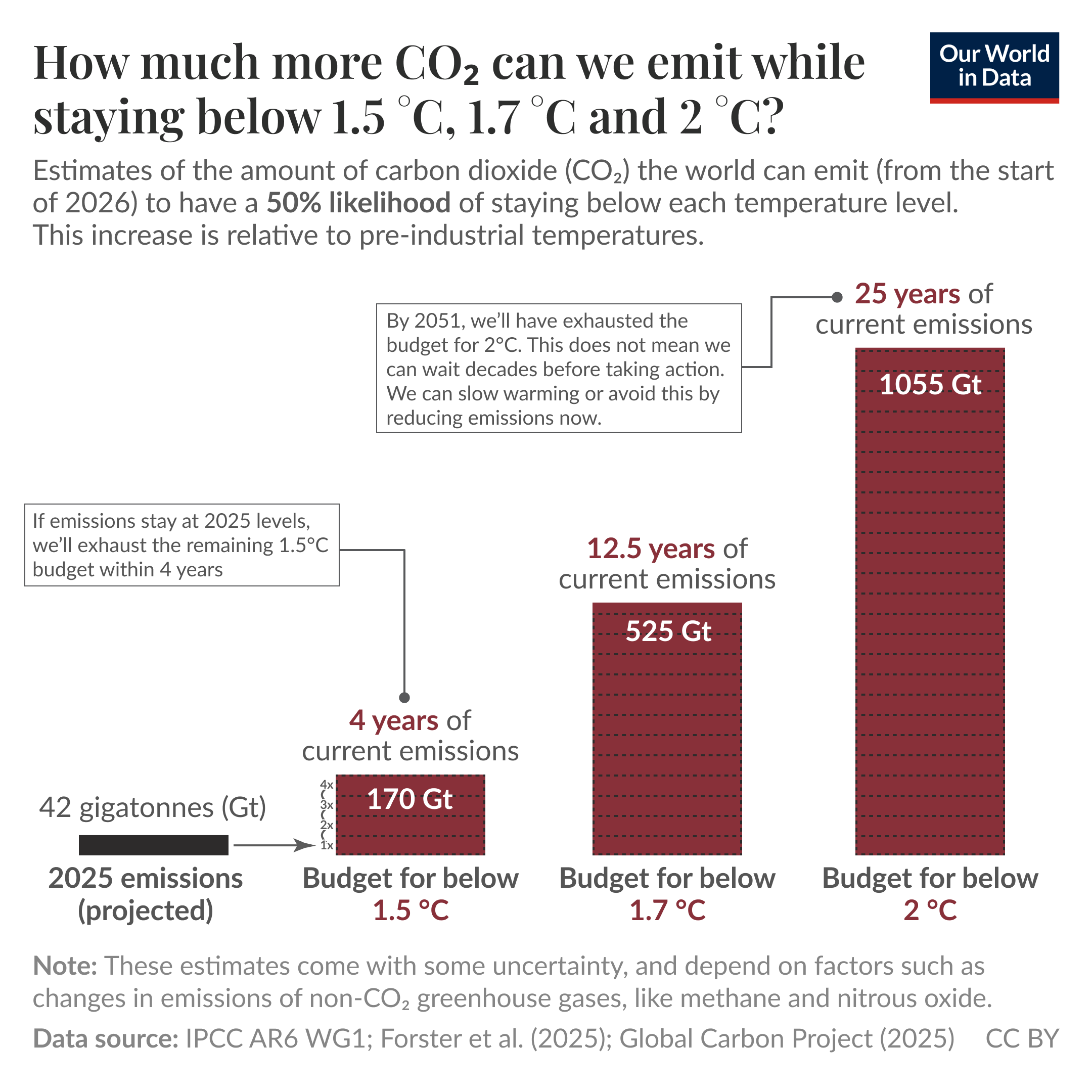
The remaining carbon budget
And an updated projection of the remaining carbon budgets left for staying under 1.5, 1.7, and 2 degrees of warming is timely, depressing – this is where we will be at the start of the new year.
More (handheld) console power optimisations
This time from the Xbox ROG Ally – the trend of PC-like gaming handhelds is super interesting, and I am keen to see whether there is bleed-through to the non-handheld world as well (a la the PS5 energy saver mode). In this case, the Xbox ROG Ally is introducing custom settings for games that manage power use more efficiently:
Default Game Profiles, available in preview starting today, automatically balance frame rate (FPS) and power consumption for 40 supported games at launch, including Fortnite, Gears of War: Reloaded, Hollow Knight: Silksong, and others, with more coming soon. This means smoother, more enjoyable gameplay and extended battery life, without requiring manual adjustments. For example, in Hollow Knight: Silksong, the Default Game Profile can add nearly an hour of battery life compared to Performance mode while still delivering smooth 120 FPS gameplay.
Default Game Profiles are hand-crafted per-game and only apply when on battery. When you launch a supported game, the system automatically applies a tailored game profile, which sets recommended power (TDP) and a FPS limit specific to the game.
 Danielle Partis, Xbox Wire Editor
Gaben’s new Superyacht
I've never looked into superyacht emissions (I can hazard a guess though!), so it might be something to check out in a future post, like I did with the emissions from the annual Valve company holiday a few years ago.
 Rich Stanton
Does fast charging a phone reduce its lifespan?
Incredible useful phone battery rig setup in this clip, and really compelling and robust findings. I don't want to spoil the conclusions, but they were a bit surprising.
Interesting new report on digital technology impacts in Asia
You can see the main page with all the stories from this series here, with investigations into to impacts on regions of India, Malaysia, the Phillipines, Indonesia, Taiwan, Myanmar and more.
And for a taste of their flavour, here's an excerpt from the investigation into the effects of Bitcoin on Laos and its power system, which reads like so many stories of well-intentioned policymakers being taken in by promises made by crypto criminals:
The so-called “battery of Southeast Asia,” as government officials like to refer to the country, has now found itself short of electricity and forced to import power from neighbors at double the export price, pushing the country’s national power utility, Électricité du Laos, further into debt.
The generous incentives have also attracted criminal activities that defraud many people globally.
Among the licensed crypto firms, Warp Data was accused by U.S. authorities of being part of a network of shell companies controlled by the founder of the Cambodian business empire Prince Group, Chen Zhi.
...
The operation blended illicit funds with newly mined Bitcoin, routing large quantities into wallets controlled by Chen. Ultimately, Warp Data reportedly helped convert a significant amount of stolen assets into Bitcoin, obscuring their origins.
Google wants a data centre on Christmas Island
For those outside Australia, Christmas Island despite the idyllic name, has often been used to keep asylum seekers that have tried to reach Australia by boat off the mainland and block access to the Australian justice system. It's a toxic policy for an issue that some sectors of the media and the public have been able to whip into a frenzy since at least 2001. Now, Google is building a defence data centre on the island. I wonder how they plan to power it...
 Kirsty Needham
A fantastic piece at the Climate Brink about the energy use that powers the modern lifestyle
I found this way of conceptualising the energy we consum in terms of equivalent human labour power quite evocative:
“It is a common refrain today to lament the “high cost of energy.” For example, drivers might complain about paying $2.50/gal for gasoline (in Nov. 2025). While that price can feel burdensome, it is actually an unbelievable bargain.
The amount of energy concentrated into that gallon of gasoline is truly astonishing: 124 MJ. To put that in a human context, it would take a human (producing 100 J/s) 344 hours, more than 14 straight days, of non-stop physical labor to generate that much energy.
In other words, you can replace 14 days of hard, high-effort human work for $2.50. This is what makes our modern world possible, and its value becomes clear when applied to everyday tasks.
 Andrew Dessler
Climate Change: What is Computing’s Responsibility?
A super interesting "manifesto" that came out of a workshop held back in March this year. Here's a small taste of it, from page 7:
The improved efficiency that computing applications enable is typically viewed as naturally yielding reductions in energy use. In reality, efficiency can drive (and in our current paradigm, does drive) the amplification of social and environmental harms. The fact that greenhouse gas (GHG) emissions have been steadily rising over the decades that computing technologies have been delivering continuous efficiency improvements is evidence of the tendency for computing–enabled efficiency gains to generate increases in demand greater than the energy reductions derived from the efficiency (cf. Jevons’ Paradox [5]). All available evidence indicates that computing contributes to negative environmental impacts of other sectors by making it cheaper and easier to do more.
 Bran Knowles
Techno-optimistic scientists take fewer climate actions
We examine techno-optimism — here defined as the belief that technology will largely solve the problems caused by climate change — among scientists using survey data from N= 9,199 scientists across 115 countries. Our findings show that techno-optimism is most prevalent among scientists in applied and natural sciences, and among those with right-leaning political views. Techno-optimistic scientists are substantially less likely to engage in civic climate action (28% lower) or make high-impact lifestyle changes (20% lower). These results suggest that techno-optimistic worldviews within science may inadvertently constrain the behavioral and cultural shifts required for effective climate action.
And if you look beyond scientists, I suspect you'd find the same sort of trend in the general population. Check out the full paper below.

Plastic Planet
Last links post I mentioned the potential power of a plastics treaty - well here’s some more analysis on the topic of plastics and the fossil fuel industry.
Every year, over 400 million tons of plastic are produced. This plastic is used to make a wide variety of products, from lightweight aeronautics components to food packaging. While some essential sectors, particularly medicine, rely on plastics to deliver life-saving technologies, most of the plastic that is produced could be replaced by less deadly materials. Half of annual production is used to manufacture single-use items, like soda bottles, balloons, wet wipes, and food wrappers. At the current rate, global plastic pollution is estimated to triple by 2040.
 Venus Bivar
Lead acid battery recycling
An investigation into lead acid battery recycling in Nigeria - yes the much more prosaic and ordinary car battery – which is contaminating Nigerian communities with lead. Horrible stuff.
No Time to Discourse
A procedural "climate fiction" map by Mark Sample – very cool.
No Time to Discourse is a speculative atlas that explores climate disaster across North America through interactive mapping and generative flash fiction.
About the Project
Explore North America, from the East Coast to the West Coast, from the tundra of Northern Canada to the Gulf coast and beyond. No disaster is ever the same. Each of the millions of stories in No Time to Discourse is a work of fiction, yet each also attempts to capture at a human level the realities of climate disaster. The maps are powered by Leaflet.js and Stamen Design's watercolor map tiles. The stories are procedurally generated through Rita.js grammars, based on extensive rules written by Mark Sample. The code for the project is available under a GPLv3 license.
About the Author
Mark Sample is a professor in the Film, Media, and Digital Studies department at Davidson College. His work uses the expressive power of computation to critique contemporary life. Mark can be found on Bluesky at [email protected].


Climate Corner
Even with the northern hemisphere heading into winter, and hurricane season in the rear view mirror, the impacts of shifting weather patterns are still being felt:
Iran is running out of water
 Nik Kowsar, Alireza Nader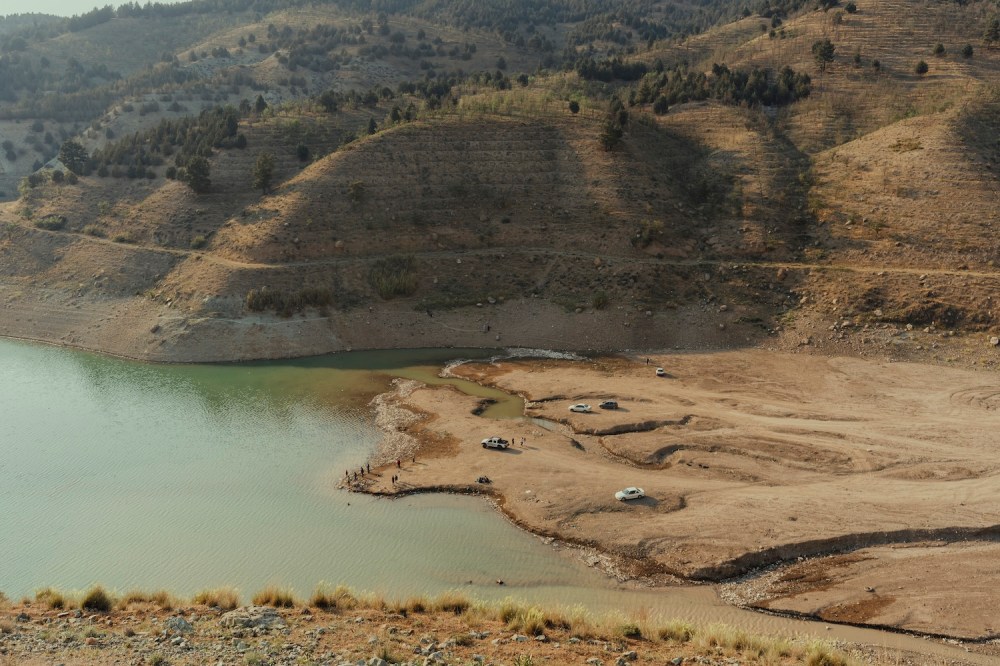
Sri Lanka rebuilding after Cyclone Ditwah
 Hannah Ellis-Petersen
Cool fact about hurricanes & cyclones - they physically cannot cross the equator.
On this LAST DAY OF HURRICANE SEASON, an interesting fact. Did you know no tropical cyclone has ever crossed the Equator!? That’s because it’s physically impossible. Storms need “spin” to develop and survive. But at the Equator there is zero spin… 1/
— Jeff Berardelli (@weatherprof.bsky.social) 2025-11-30T12:52:16.629Z
Deadly flooding in Vietnam
 Agence France-Presse
Finishing with something a bit lighter
I don’t know why the Buffalo Bills social media account has started posting philosophical reflections, but this one on Wabi Sabi, which is a philosophy of sufficiency and repair is... nice.
Thanks for reading GTG! Hope you have a great weekend.