ESG Season kicks off with a CDProjektRED sized bang + AI impacts & standards + some good news – GTG Links 72

Welcome back to another links digest. We're kicking this one off with a look at the first game ESG reporter of the year, before we dive into (what else!) more AI and data centre second order impacts, a new AI environmental impact standard (that looks great imo), and to counter-balance the doomer tendency, we're finishing with some frankly awesome good news at the end. Let's get stuck in.
GTG is a 100% reader-supported publication, keeping the virtual lights on solely thanks to our generous supporters. You can join their ranks for a small monthly amount, or take our an annual membership at a discount.
I know times are tough, doubly so in the games industry, so please only do it if you are able! But know that it helps a lot if you can. Cheers!
CDProjektRED's 2025 sustainability statement came out last week, and it contains the usual list of pertinent disclosures for ESG minded stakeholders, as well as an impressive list of new achievements from the past year. I must sound like a broken record, but every year it seems like this team keeps lifting the bar.
A high-level summary of what they achieved last year:
- Changing electricity suppliers allowed them to directly purchase renewable electricity
- Optimising building energy use with a building management system saved energy
- 29 kW worth of additional rooftop solar was added to their latest building
- Installed a system for recuperating heat from the server room for water heating (!!!)
- And projects supporting employees to use zero- or low-emission modes of commuting to the office delivered savings
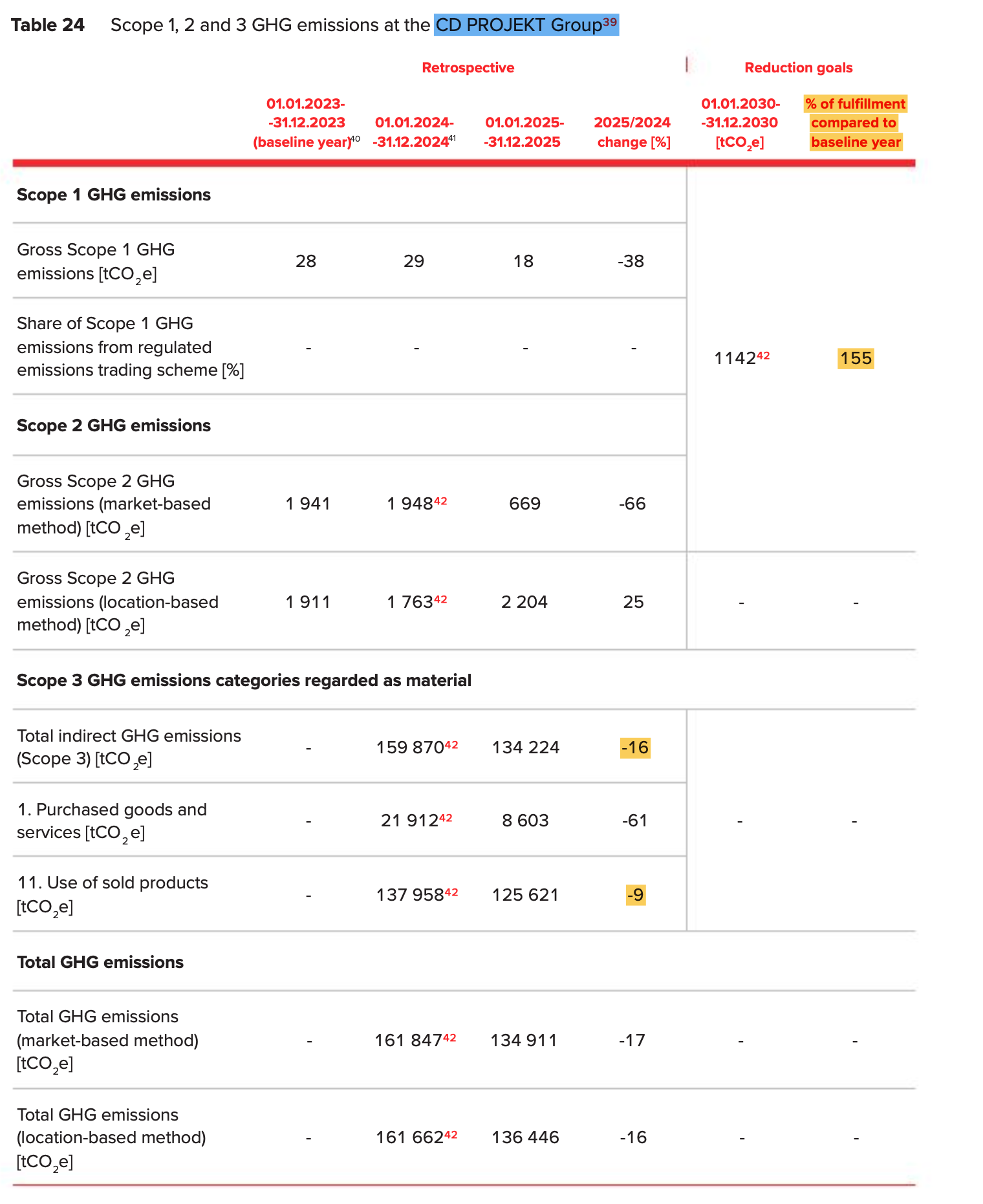
The bottom line: "Reductions resulting from key decarbonization activities... are estimated at 1871 tCO2e in 2025." That's more avoided emissions than some game SME's total emissions. It's a real achievement, and worth celebrating – particularly in the wider context that 2025 presented, with regulatory headwinds that threatened to undermine the recognition and attention on exactly these type of efforts. But hey, even if the EU can't get its sustainability act together, this shows there's nothing stopping anyone else from stepping up into the gap.
Perhaps most exciting, however, is the following statement: "In 2025, we set a goal to develop, by 2026, the framework for a long-term emissions reduction target across the value chain through 2050." Not content at having slashes Scope 1 and 2 emissions, they're diving into the whole value chain and seeing what can be done.
Key Scope 3 categories remain Scope 3.1 (purchased goods and services) and Scope 3.11 (use of sold products) which still make up 95% of their value chain emissions – and this includes GOG.com for likely the final time, having now sold off the game distribution business. Even there, however, we get exciting new details:
Due to improvements in the quality of raw source data – among others, access to detailed information concerning the carbon footprint of cloud services, obtained directly from suppliers of such services, as well as updates to the emissions coefficient for data transfer services – we updated our category 1 Scope 3 emissions reported for 2024. The adjusted 2024 figures are significantly lower than those reported in our 2024 Sustainability Statement. [Emphasis added]
You hear that? That's the sound of accuracy delivering accounting reductions, via getting closer to suppliers activities, resulting in lower numbers than estimates. Proof positive that sharing and good, solid, accurate measurement delivers. Even though GOG is no longer part of CDPR, I bet this new supplier data also provides new leverage over said emissions as well. Here's hoping whoever takes on that job makes the most of it.
Back to scope 2 and the new purchase of renewable electricity – CDPR's renewable power percentage practically leaped from 3% to 63% last year. By my calculations, this puts CDPR in 4th place in the (unofficial) leaderboard of renewable energy usage claimed across the games industry (assuming all others retain the same percentage they had in 2024). Want to know who the top 3 are? Close readers of GTG may remember or be able to guess – but that data is exclusive to the SGA members and the 2025 Sustainability snapshot. ;-)
Here's the all important table of absolute GHG emissions totals – please excuse my highlighting – but if I'm reading it right, this seems like the past year has seen the CDPR Group achieve 155% of their original 2030 goals, five years early??
Some other tidbits for those interested: there's new climate risk adaptation plans for dealing with physical climate risks including (and I love this phrase) the “tried-and-tested remote work model”, as well as a bunch of other practical risk mitigation and planning. Ugh, I know, I know, I really must stop gushing over this, but it's just so good to see those at the top of their game staying winning.
Here's where to get the full report if you want more details – its a big zipped digital html file. Fun! Let's see who can match that energy this year.
Regenerate Jam
The Regenerate Game Jam 2026 game jam hosted by the IGDA climate SIG has just concluded, and I'm looking forward to the results. In the meantime, here's one very, very silly prototype game I saw that made me laugh. It's called Gaia with a Shotgun and it lets you "shoot" plants into existence with a shotgun (what else?) and explode trees out of the ground via grenades. Silly, silly stuff.
Another new AI environmental impact standard
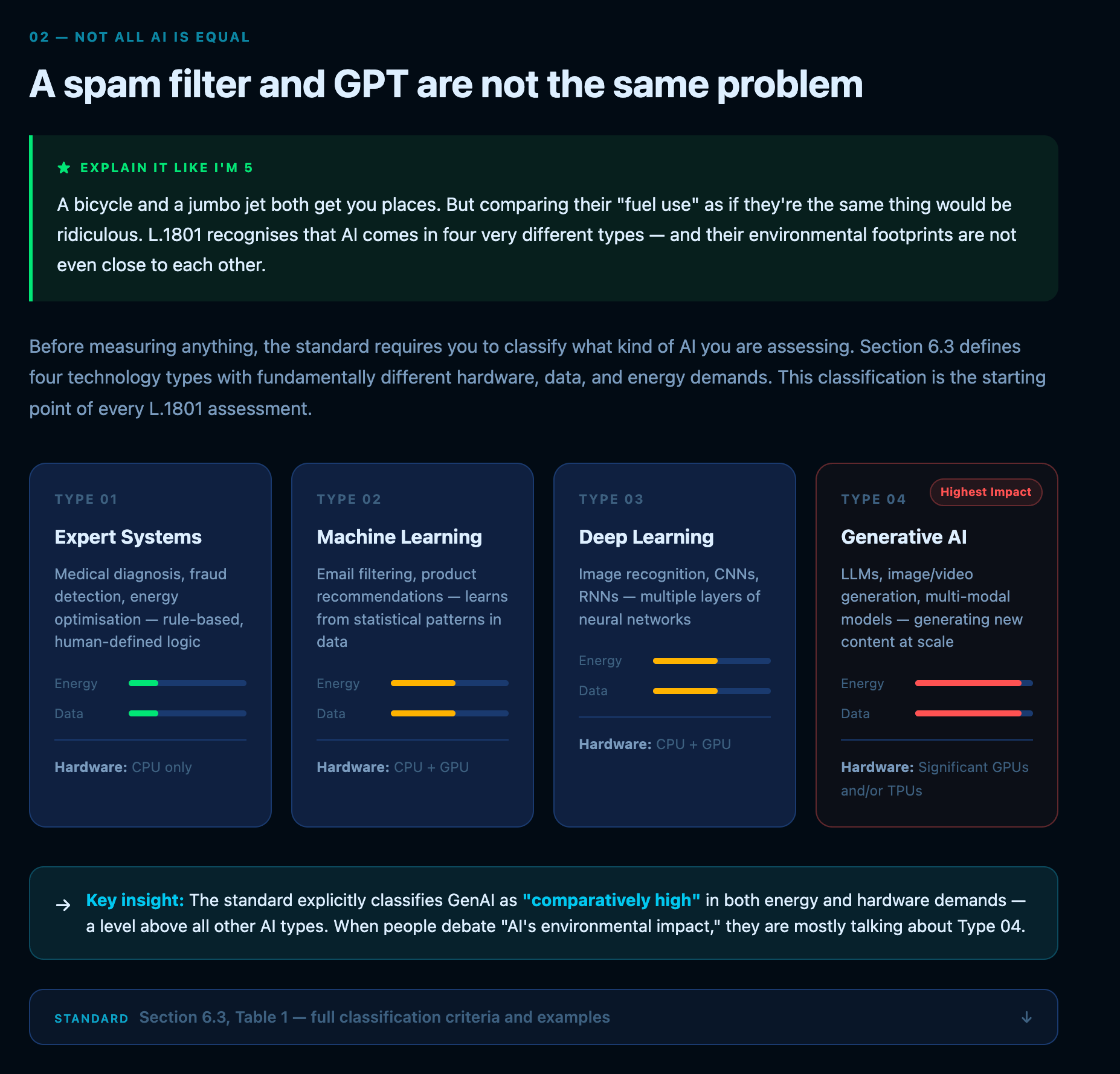
This time produce by the ITU. Looks quite good and comprehensive. A key feature is distinguishing between types of AI systems from traditional ML and Deep Learning techniques, to generative AI like Claude/ChatGPT/DeepSeek et al., with different approaches for each. Nice to see our Sustainable AI for Gaming event takeaways (on YouTube if you missed it!) largely in line with these approaches.
Here's the link to the website if you want to dig in.
Game preservation website Myrient, hit by the increasing cost of storage, closes down

So you might have seen that it's not just a RAM pricing crisis, but a storage crisis as well; thanks, largely, to AI companies buying up inventory, and profit maximising manufacturers swapping away from low-margin consumer grade parts? Another flow-on effect seems to have arrived, as (at least one) game preservation website is now going under. Read the full story here.
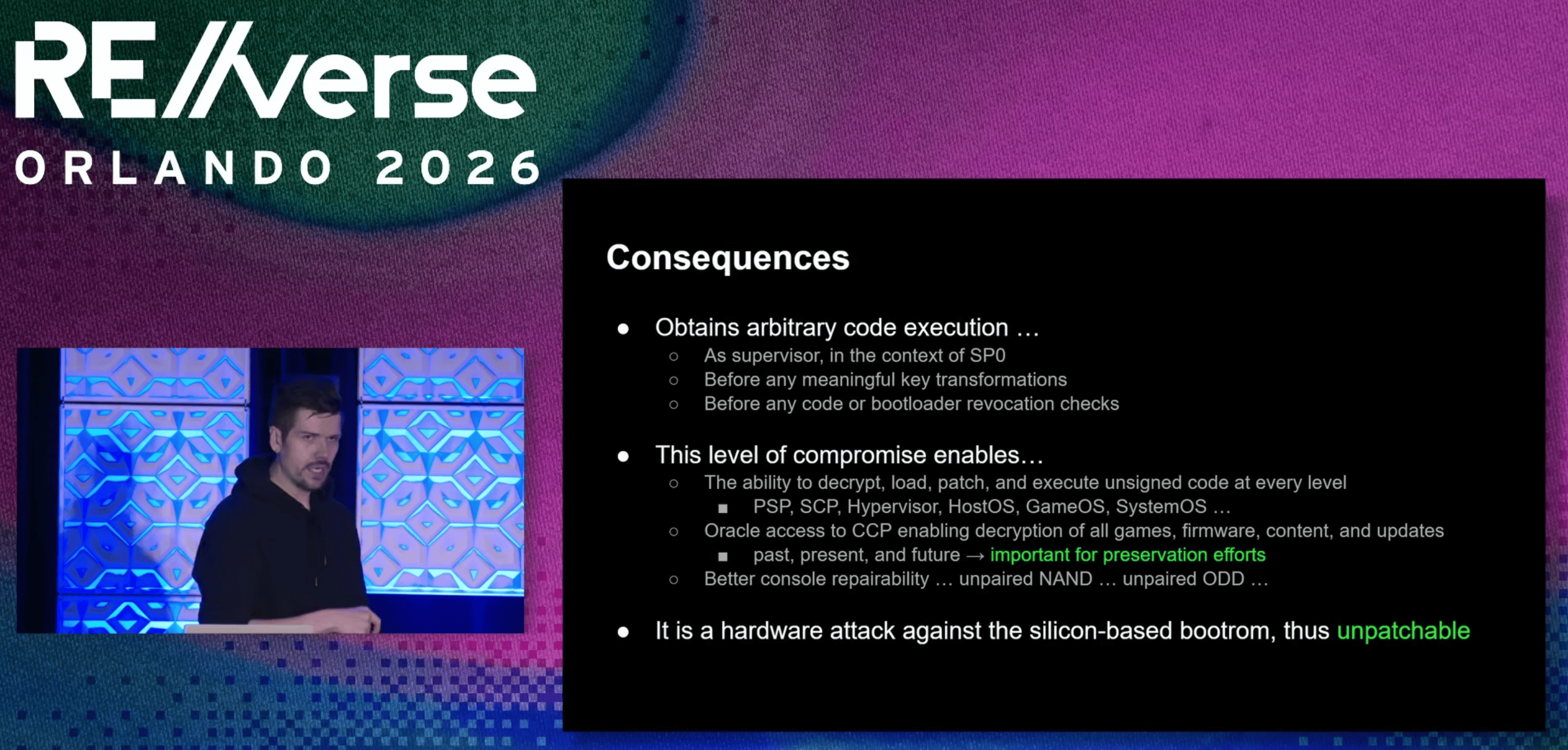
Speaking of game preservation – this week I watched the fascinating talk above about the process of hacking into the BootROM of the Xbox One console via some extreme levels of hardware hacking. The sustainability angle is that this sort of control enables comprehensive repair options (such as swapping out cryptographically paired optical disk drives, which do fail with age) and at the more extreme end, could facilitate the total repurposing of otherwise mostly useless, but perfectly functioning hardware for other, general purpose computing.
Look I might just be having an oil crisis inspired fever-dream of a world economy post-fossil fuels. A world that runs more on principles of computational sufficiency and repair than disposability and upgrades. In such a world I'd imagine repurposed gaming hardware would be a very attractive option for some cheap compute. Hey, a guy can dream.
Gas power plant planned as part of AI data centre in South Sydney
I get it – if this were in my backyard, and I could foresee CO2 and particulate matter, not to mention the jet-engine noise of a 24/7 gas turbine was about to invade my quiet neighbourhood, I think I would be pretty upset too!


Speaking of which – here's some new findings on the local health impacts of DCs. Look at the concentration of that PM2.5 particles. It's like someone just dropped a 6 lane freeway through your town.
 Cindy Sabato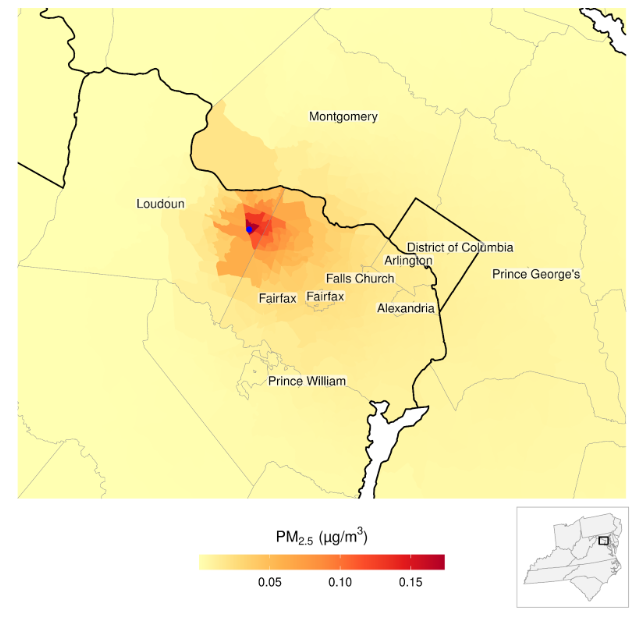
And data centre energy demand is also threatening London’s climate targets – so the mayor is looking at changing the cities policy.


Creative Commons + AI training
Creative Commons releases CC signals - allowing creators to indicate how they want (or don’t) their content to be used by AI training. Neat! Provided that trainers follow the rules (a big if).


Super fast EV charging from BYD
This looks pretty cool – though, past a certain point we might be approaching diminishing returns here... but on the flip side, this sort of tech and infrastructure does inevitably trickle down and out to other areas. I won't be holding my breath on seeing one of these flash chargers installed in Australia anytime soon. Pretty cool to see what can be done though.
 Liu Miao
And on wider EV industry dynamics
The FT reports that lots of late entrants into the EV market have lost billions, and are now pivoting back to combustion engines... 😬

If you ask me, this pivot back isn't going to save them either, and just means that more and more companies are going to start scrambling for a piece of a smaller and smaller pie. Chinese EVs are still going to eat their lunch, particularly if petrol prices stay at their present historic highs – let alone go higher.
Meanwhile, sales of internal combustion engine cars peaked in 2018… 👀
 Hannah Ritchie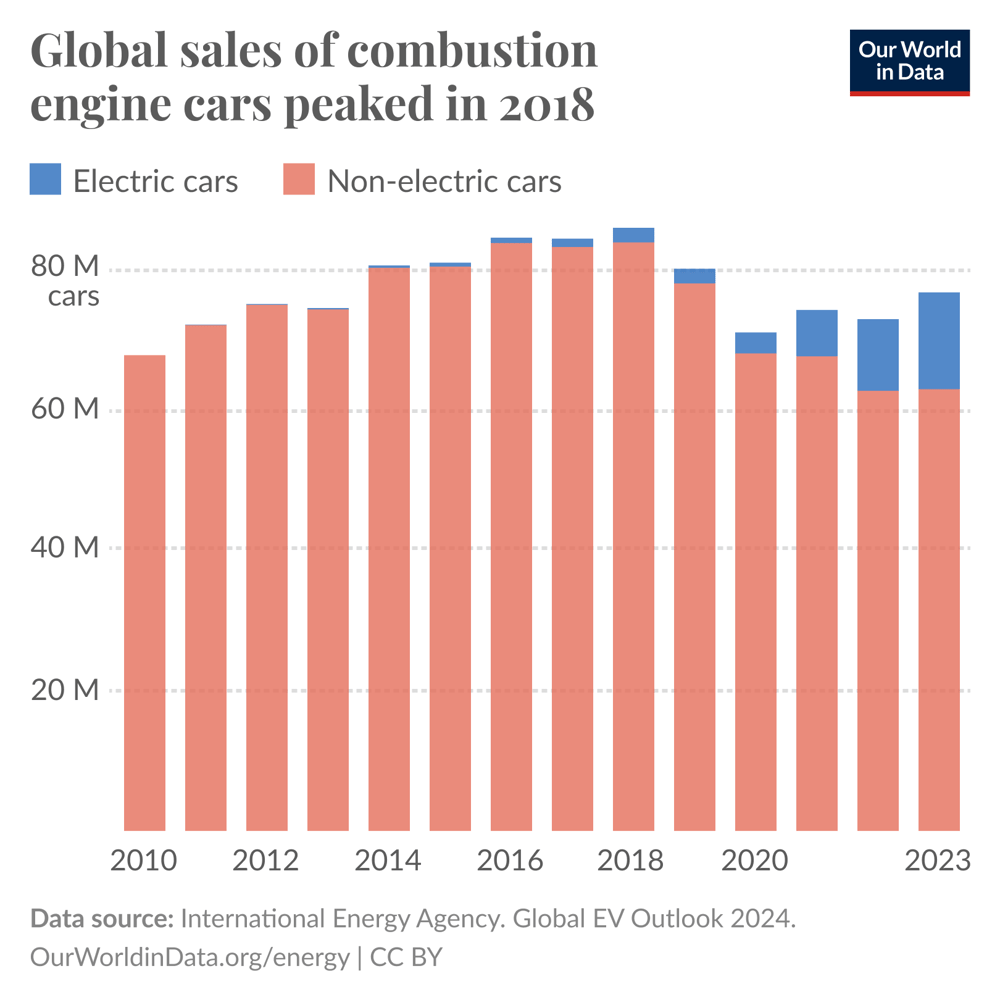
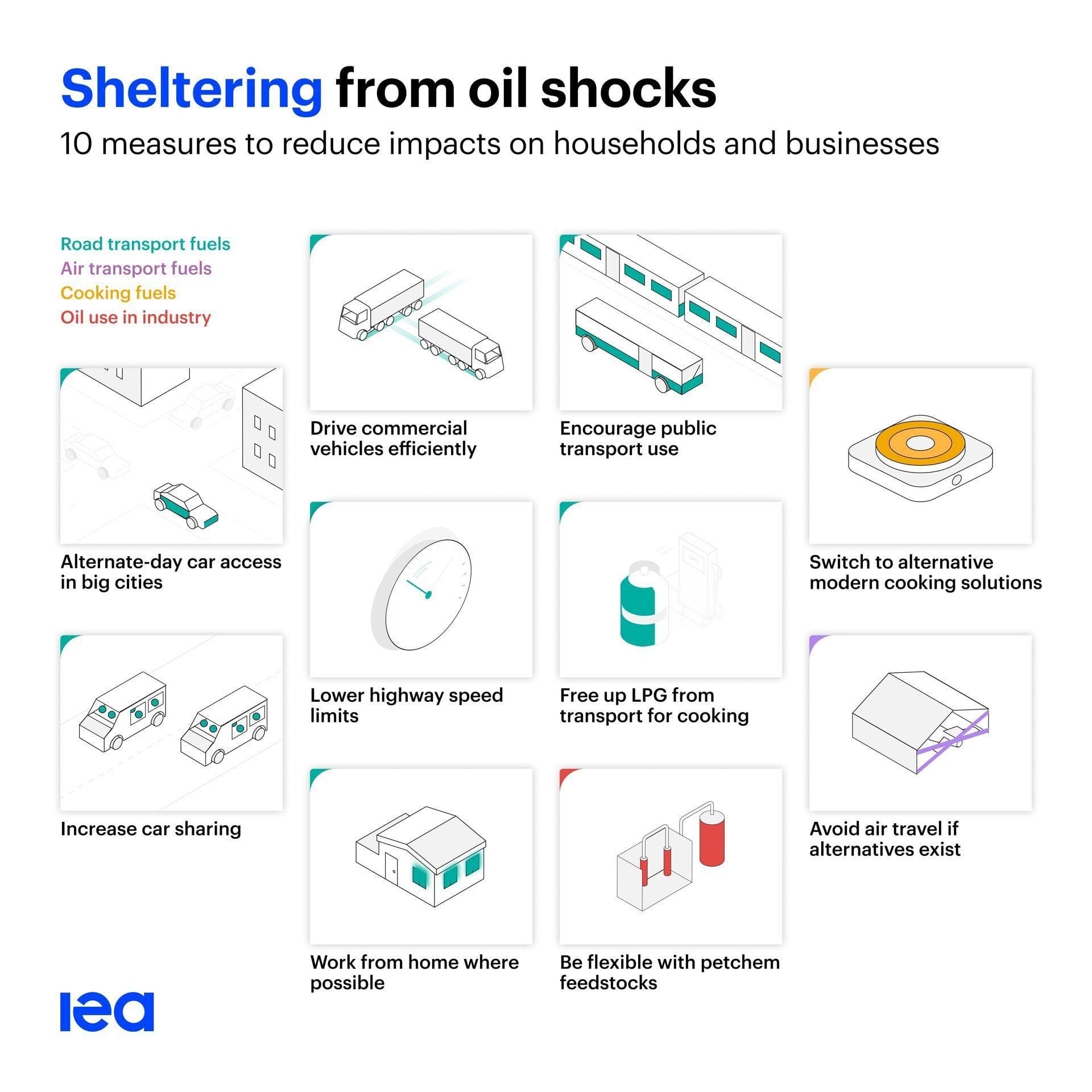
From the IEA: measures for saving energy
Every little bit helps...?
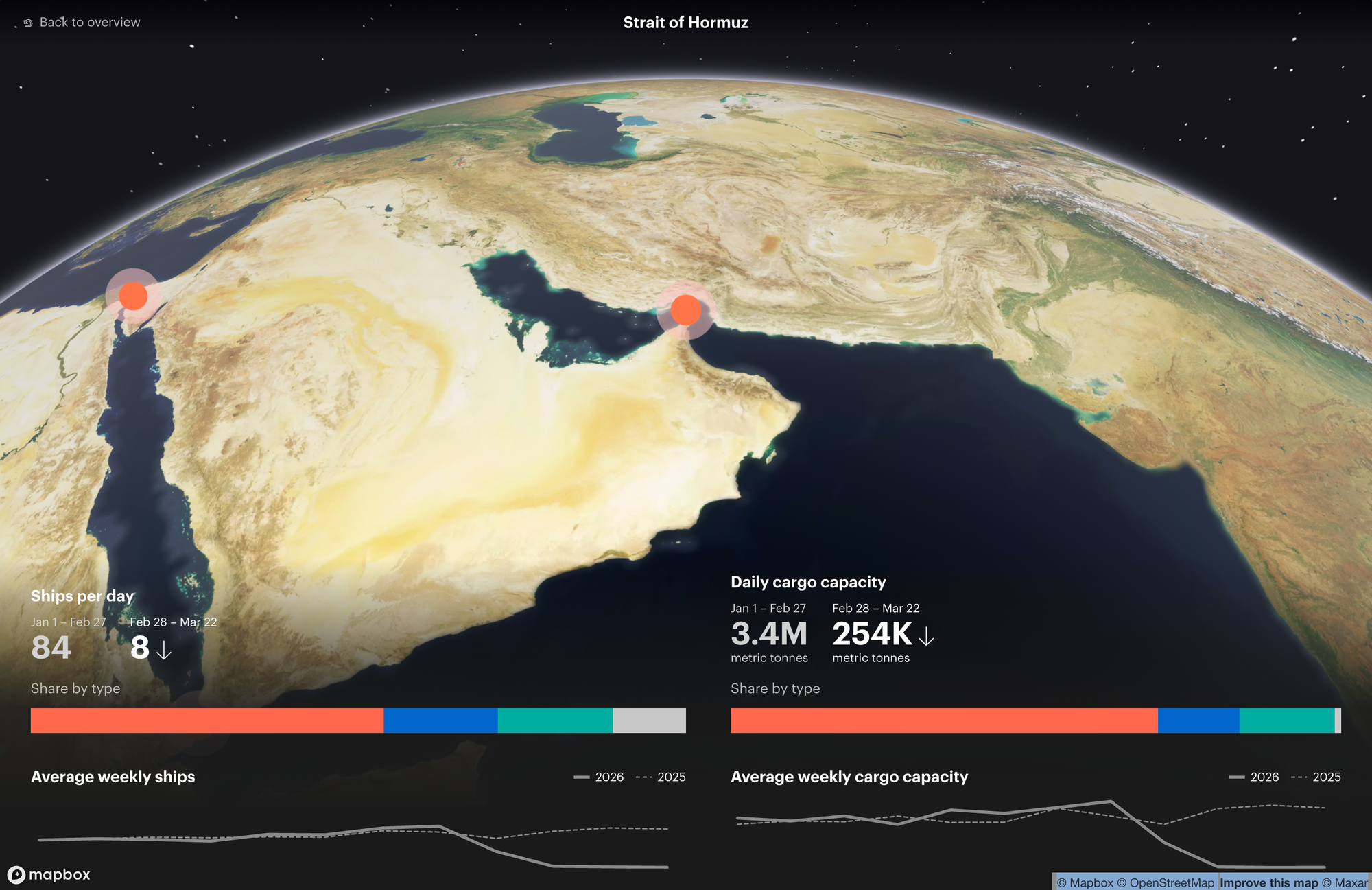
Also: if you want to indulge the masculine urge to monitor the situation (lol) then you could do worse than checking out the IEA’s interactive map of middle east energy choke points, daily traffic, cargo capacity missing, and so on.
Good news time!
Alright that's enough of that – time for the good stuff! Starting with gophers that have helped to restore the environment and ecology of Mt St Helen’s after the massive eruption 40 years ago. Cute and awesome.
 Michael Natale
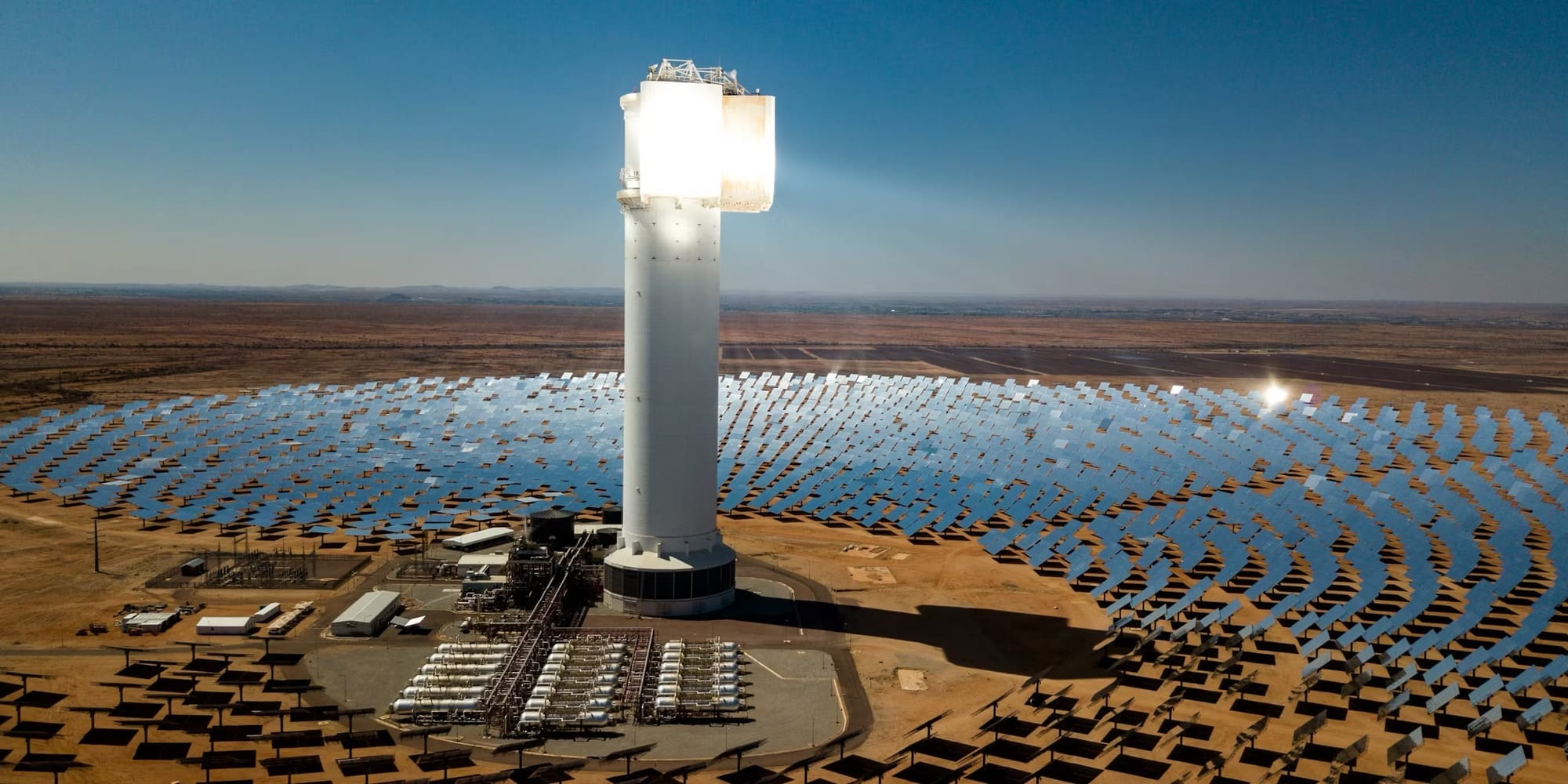
Also this week, I learned about the existence of Khi Solar One, (also the post header image) a South African solar collector power station, similar to the more well-known Ivanpah solar system in the Nevada desert.
 Contributors to Wikimedia projects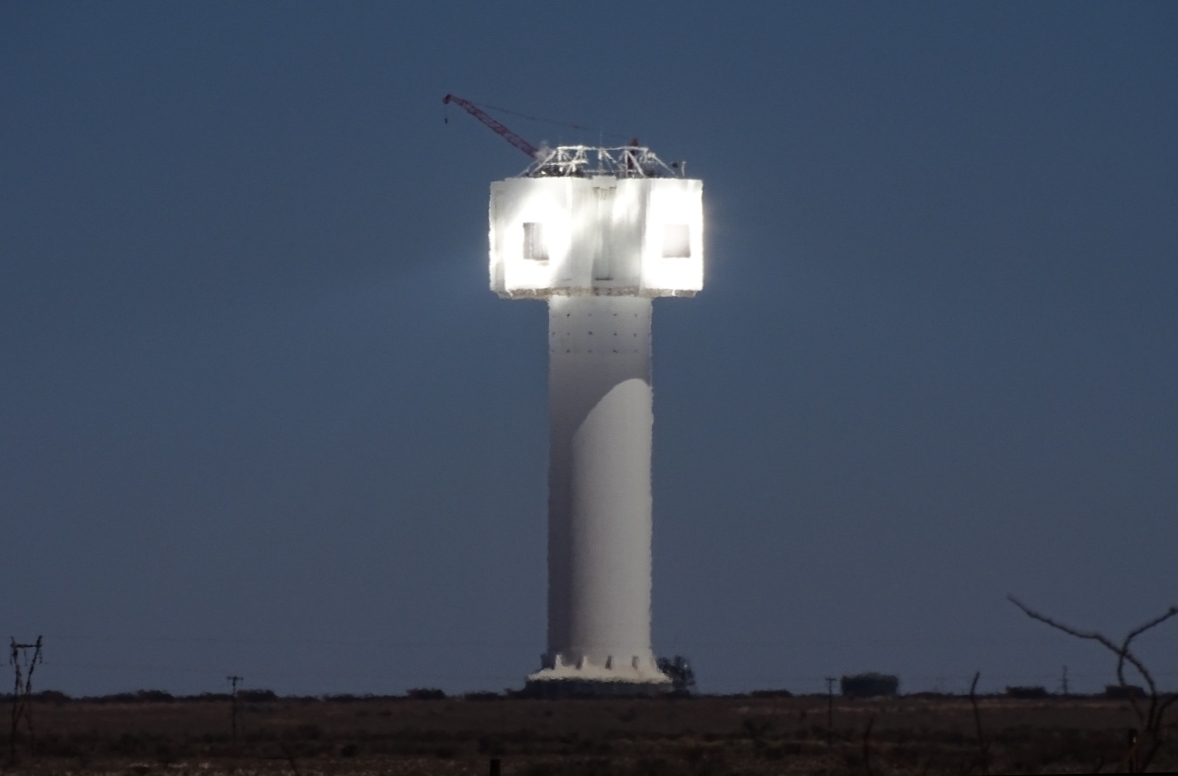
I'm on record as a fan of viewing renewable energy-infrastructure as potential landscape art for some time. I think we're still underselling how nice renewable infrastructure looks, and have let reactionary forces overdetermine them as "eyesores" and a "nuisance" etc in extremely specious ways. We need to connect them with the appropriate vision of hope for a better collective future they represent, as well as involving those who are directly impacted by them in sharing the economic benefits as well.
In reading up on Khi Solar One, I also learned that in 2025 South Africa got a renewable energy masterplan. Much like China's celebrated leadership, when you look elsewhere outside the Global North, there's plenty to celebrate as well.
 Ricardo Amansure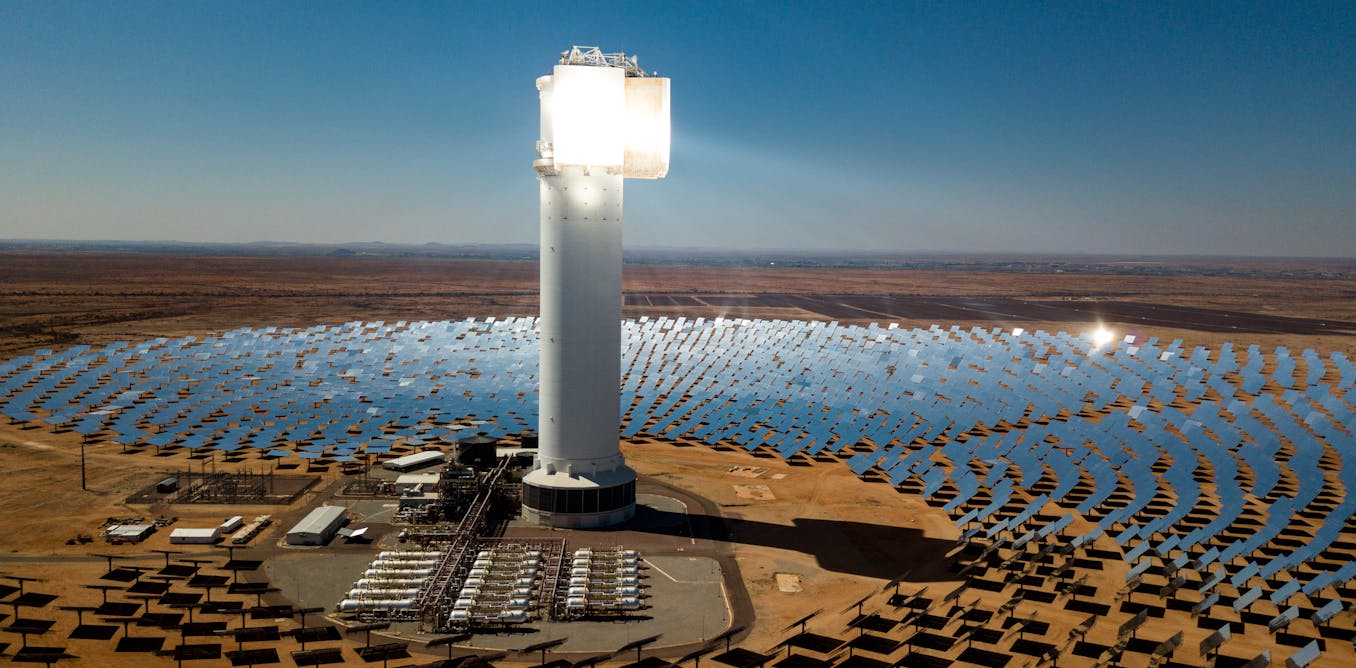
And finally, a post arguing that LNG demand is going to go even lower off the back of these new eye-wateringly high prices – thanks to reduced demand in India and China in particular:
“Two weeks ago on LinkedIn I also pointed out that the war would result in short-term LNG profits while destroying its future markets as everyone will just switch to renewables for power generation and batteries for trucks and they will not switch back.”
 Justin Mikulka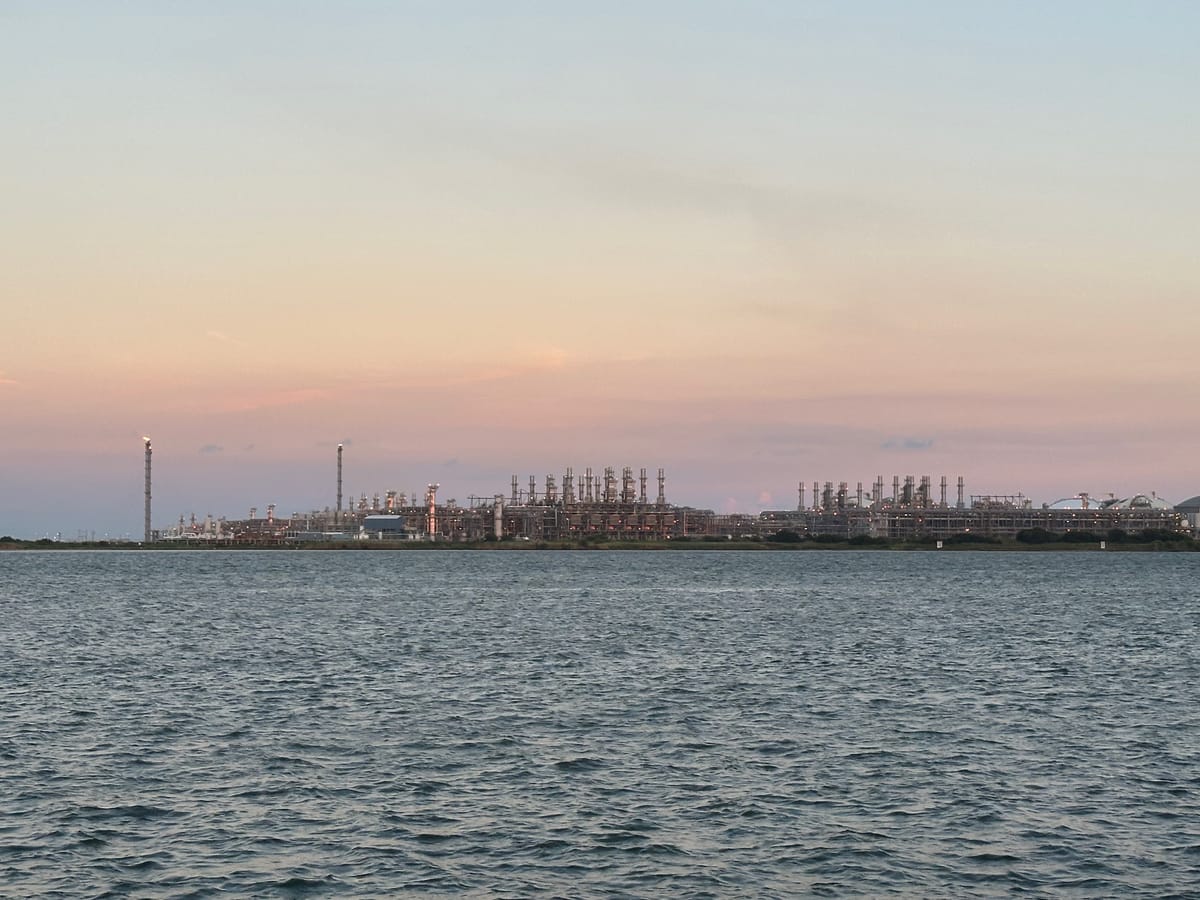
As painful and immoral as the US and Israeli war on Iran is, I have a faint hope that it could be the last time the world stumbles blindly into a fossil fuel crisis, as we see just how unreliable and risky the old energy paradigm is. Energy decentralisation is energy sovereignty is climate policy. It's the one silver lining in an otherwise bitter and depressing situation.
I wish we didn't need to relearn the lessons of 2022 again, but here we are. At least Asia seems likely to get it this time, even if Europe refused the first time around. Perhaps this time will be different? I won't be holding my breath.
Thanks for reading! If you enjoyed this, please consider:
Until next time.