New Year, New Climate – GTG Links 69

Welcome back to a new year – though we might be hard pressed to describe it as happy new year right at the minute, with a global political backdrop that is less than ideal and greenhouse gasses in the atmosphere reaching their highest concentrations ever.
ICYMI - the latest monthly status on greenhouse gas levels... For more NOAA data/info: gml.noaa.gov/ccgg/
— Zack Labe (@zacklabe.com) 2025-12-29T01:48:34.820Z
I still remember when 420 ppm freaked me out – we're well past that now
While the northern hemisphere enters its winter months, Australia is currently sweltering through the hottest summer heatwave since 2019, a summer which saw bushfires blanket the entire east coast in smoke. So far we've seen fires destroy around 18 homes in the central coast north of Sydney, and conditions for today (Friday the 9th) are being described as potentially "catastrophic" in parts of the state of Victoria. This is the kind of high heat, high wind days that can supercharge bushfires and make them nearly impossible to fight.
And even while the northern hemisphere experiences winter, climate impacts are still being felt. In December, the US pacific northwest received more rain than usual, due to a warmer than usual winter with more precipitation falling as rain than snow, with massive flooding the result.
 Andrew Dessler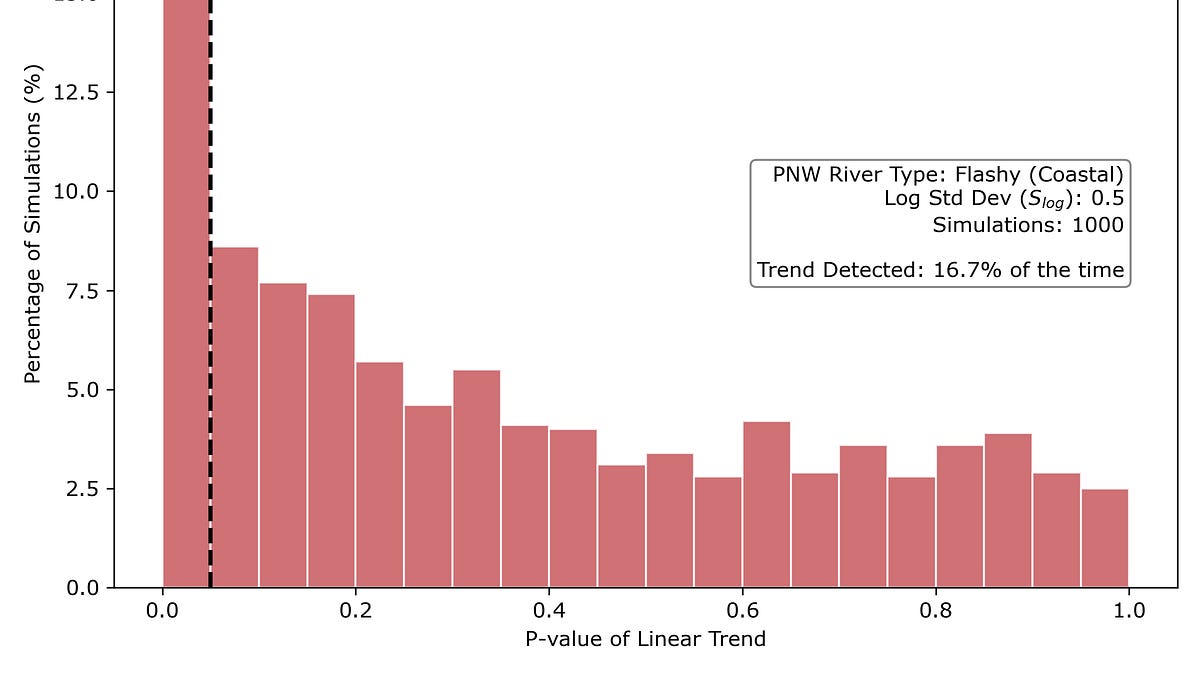
In the Mediterranean and Central Asia, January temperature records are being smashed as Crete records the "warmest January night in European history".
HISTORIC JANUARY SUMMER Hundreds of records smashed for over a week: 35C in Algeria,20 in Russia, tropical nights in Greece,records allover central/east mediterranean from Algeria to Turkey (excluding Italy) Next night will be the warmest January night in European history (in Crete).‼️🇬🇷🏆
— Extreme Temperatures Around the World (@extremetemps.bsky.social) 2026-01-07T16:17:31.115Z
But you could be forgiven for missing all of this, either due to being on holidays (as I have been) or because there's just so much going on in the world particularly on the geopolitical front, as climate issues for most of the world have fallen off the radar. We're definitely in a low ebb, but I take some comfort in the fact that these things are cyclical. Though it's not issue No.1 right now, it's only a matter of time before an increasingly angry planet forces its way back onto the agenda. So long as fossil fuels continue to be burned, the dice will continue to become more and more loaded towards extreme weather. The chance of another disaster on the order of a Hurricane Helene or Katrina, another season of wildfires choking Europe, or some other unforeseen disaster are only getting higher. I hope we continue to remain lucky, but let's not rely on luck and instead do all we can to bring emissions under control, starting with good, strong, solid methods for calculating emissions that give us a plan and a pathway to reductions. That's my goal for 2026.
The turn of the year is also a quiet time for games, and so most of the news I want to highlight for you comes from other fields that will (eventually) have a bearing on how things turn out in the long run. But fear not, we will soon be knee deep in a fresh new 2026 ESG reporting season, with new figures on the impacts the games industry from 2025 – perhaps this year some of those reports will even use the SGA Standard for their calculations and disclosures, and SGA members already have the ability to draw on the detailed benchmarks from the SGA 2025 Sustainability Snapshot. More on that in a future post!
For now, get yourself a warm (or cold) beverage and lets take a look at what's new. There's a lot of weather and climate news, and we'll end with the customary Stories That Are Currently Giving Me Hope.
Steam... phones?
Valve has been a major player in pushing towards open source gaming, having done a lot to get Linux gaming to the state it is today, and some analysts are predicting it could radically reduce the barriers to porting games to phones.
Valve has been quietly funding almost all the open-source technologies required to play Windows games on Arm. And because they’re open-source, Valve is effectively shepherding a future where Arm phones, laptops, and desktops could freely do the same. He says the company believes game developers shouldn’t be wasting time porting games if there’s a better way…
“Because there’s a lot of price points and power consumption points where Arm-based chipsets are doing a better job of serving the market. When you get into lower power, anything lower than Steam Deck, I think you’ll find that there’s an Arm chip that maybe is competitive with x86 offerings in that segment.”
 Sean Hollister
Software Carbon Intensity metric for AI
The specification covers the full spectrum of AI systems: classical machine learning, computer vision, natural language processing, generative AI, and agentic systems. It supports diverse functional units—tokens for language models, inferences for classifiers, and FLOPs for training efficiency—reflecting how AI systems are developed and deployed in practice.


Is there such a thing as 'Green AI'?
Ecosia – the tree planting search engine – has some made shonky claims about its use of “green AI” which Ketan Joshi helpfully teases apart and critques.
 Skip to content
F1 engines in 2026 are going to be 50:50 hybrid petrol/electric
Data centres in Sydney are predicted to use one quarter of all drinking water within the next 10 years.
If the embedded reel doesn't display correctly in email, here's a link to view it on Instagram. It should display fine if you're reading on the web.
The weight of all CO2 emissions
When you see it like this, it sort of makes sense why all that stuff is acting like such a thick blanket over the atmosphere.
Humans have emitted 2750 gigatons of CO2 since the industrial revolution from burning fossil fuels and land use change. To put this in perspective, this is more than the (dry) mass of all living things on earth and everything humans have ever built combined:
— Zeke Hausfather (@hausfath.bsky.social) 2026-01-02T18:49:55.000Z
Sea Level Tipping Points
This is a good discussion of the dynamics that will decide how much of a problem sea level rise becomes – and it's all about rates of change. That could be the difference between widespread suffering and dislocation and a much more managed process of retreat and prioritisation. It's all on decade timescales, but time flies, and 2050 will be here before we know it.
“Green fatwas” vs Greenwashing in the world’s most populous Muslim country
I really wish we saw more reporting from Indonesia – even though it's Australia's biggest and nearest neighbour it's so often overlooked. But it's going to be a critical country at the forefront of climate impacts. I really wish I knew what the Indonesian game industry was like too... someone should probably study that.
Seattle got drenched in December
I linked this at the start, but it's worth highlighting in detail as it is a key explanation of how and why even cold climates aren't going to escape climate change. It's not just a hot weather problem, it's an everything problem.
...as freezing levels rise due to warming temperatures, precipitation is increasingly falling as rain. Unlike snow, rain does not sit quietly in the mountains and wait for spring. It runs off immediately.
So when a storm dumps 10 inches of precipitation and half of it falls as snow, the rivers only have to handle 5 inches of water immediately. But if all of it falls as rain because it’s 45°F in the mountains, the rivers have to handle the full 10 inches right now. This climate-enhanced runoff can overwhelm the river system, leading to the widespread flooding we see now.
 Andrew Dessler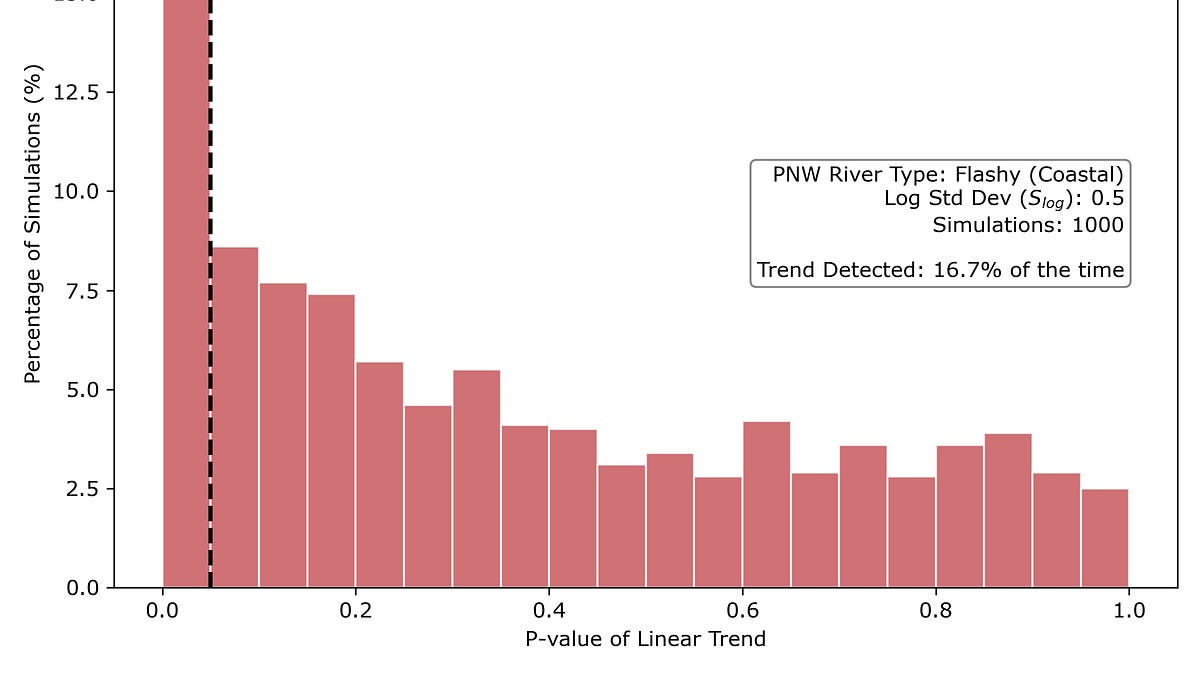
The NOAA Arctic Report Card provides a picture of a region of the world undergoing rapid transformation
Here’s another of the many unexpected and surprising impacts on cold climates:
As thawing soils release iron and other minerals, more than 200 watersheds across Arctic Alaska now show orange discoloration. These waters exhibit higher acidity and elevated levels of toxic metals, which can contaminate fish habitat and drinking water and impact subsistence livelihoods.
In Kobuk Valley National Park in Alaska, a tributary to the Akillik River lost all its juvenile Dolly Varden and slimy sculpin fish after an abrupt increase in stream acidity when the stream turned orange.
 Matthew L. Druckenmiller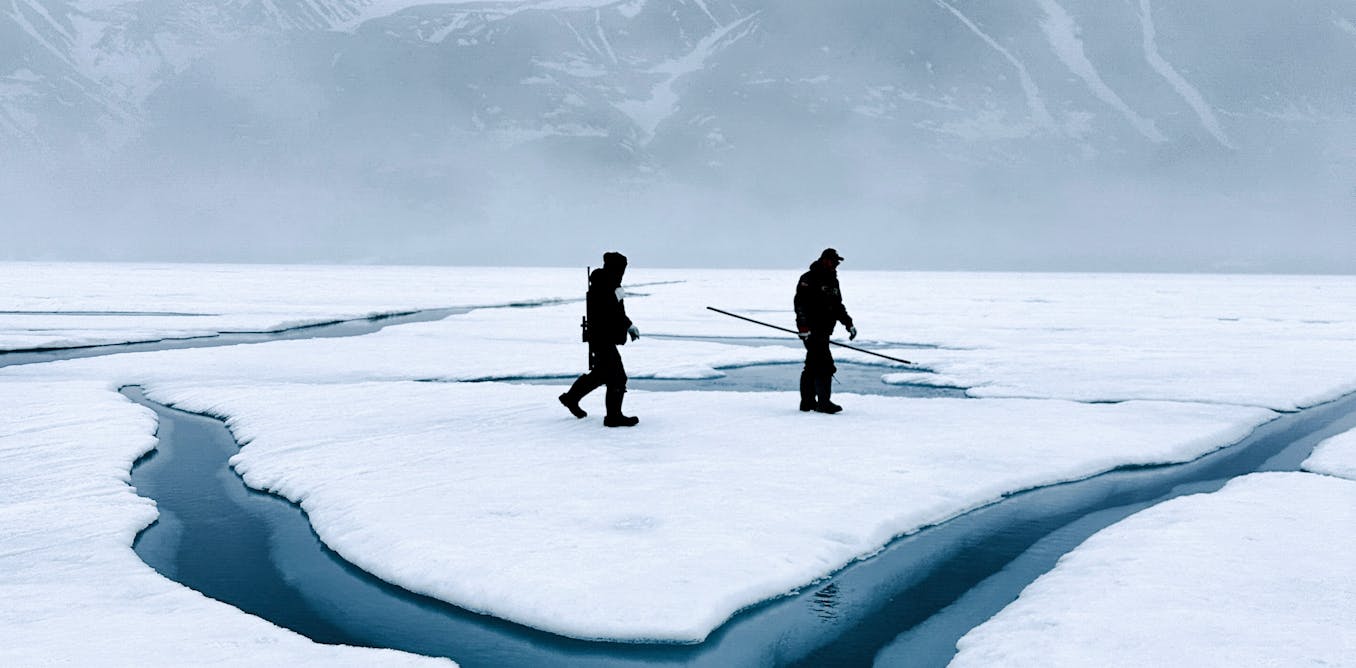
The AI buildout has so far generated emissions equivalent to New York City
Perhaps AI needs its own Mamdani?
 Robert Booth
Lets finish with the two Stories Giving Me Hope Right Now
The first is about sodium-ion batteries entering mass production – the world's biggest battery company, CATL, has got the price of a new chemistry of sodium batteries down to $19 a kWh. This is hugely exciting because a) it does away with the need for costly and damaging lithium mining, and b) because sodium is an incredibly abundant material (salt, if you recall, is NaCl – sodium-chloride, and we have so much Salt). The price per kWh that CATL have achieved is already about 60% lower than the cheapest LFP, probably largely due to the removal of exotic materials like lithium, cobalt, nickel, etc. which are needed in most Lithium-ion batteries. That is an absolutely crazy good development, and if CATL are to be believed, these new sodium batteries have supposedly got 3-6x longer life than the most durable LFP (lithium-iron-phosphate) batteries. Yowza!!! That's is the best news I've heard all year. 🥁
Sodium batteries could well be the battery technology that enables the type of exponential cost reduction curve that we saw with solar panels, and as we've already seen with more expensive batteries, the two technologies have a huge potential to solve grid emissions, flatten the solar "duck curve" of excess power during the daytime, and allow for greater utilisation rates of solar. It's win-win-win all round.
Our other feel-good story comes from the Australian power grid which, with the huge amount of solar power that now feeds into the national energy grid, means that summer brown-outs and high power prices are very possibly a thing of the past.
"Mr Eldridge said this week's heatwave marked a turning point for Australia's energy transition.
In the past, he said extreme heat "placed continuous pressure on supply throughout daylight hours".
To ensure supply, coal and gas plants had to "run hard from morning until evening, with little respite".
As recently as 2019, during another heatwave, he said this historic precedent was largely true."
 energy reporter Daniel Mercer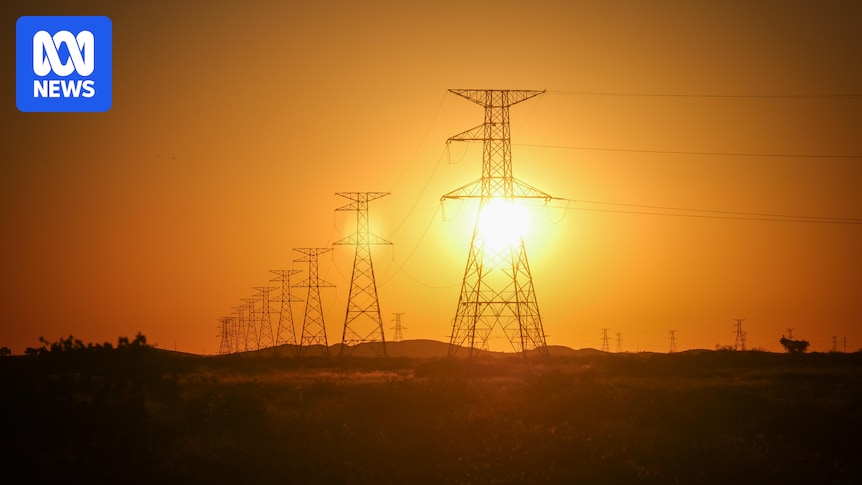
How good is that? It should give everyone hope, particularly those hotter climates (I'm thinking of places like parts of Asia, Texas and Central America, and the entire Mediterranean) who can look forward to the same dynamics – provided that the political will can be found to ensure it happens.
Thanks for reading the first GTG Links post of 2026! I hope all my wonderful readers had a nice break, with some time to put your feet up – especially those Greening the Games Industry Supporters who help keep this newsletter viable with a monthly or annual contribution. You know who you are!